Zoo Bedtime Story: A Calming Evening Routine for Kids

Help your child unwind with a calming zoo bedtime story. Learn sensory techniques and routines to turn wild energy into peaceful sleep tonight.

· Storywish

Zoo Bedtime Story: A Calming Evening Routine for Kids

Table of Contents

  1. Introduction
  2. The Magic of the Zoo at Nightfall
  3. A Soothing Zoo Bedtime Story to Read Tonight
  4. Why Animal Bedtime Stories Help Children Wind Down
  5. Real Animal Sleep Habits to Share with Curious Kids
  6. Sensory Storytelling Techniques for Restless Bedtimes
  7. Making Your Child the Hero of the Zoo Tale
  8. Step by Step: Creating an Evening Zoo Routine
  9. Frequently Asked Questions
  10. Conclusion

Introduction

Bedtime after an active day can feel like trying to slow down a runaway train. If your child spent the afternoon running around, roaring like a lion, or asking twenty questions about giraffes, their mind is likely still spinning with energy. A zoo bedtime story offers a gentle way to bridge that gap between wild daytime play and peaceful nighttime sleep. When children hear about their favorite powerful animals getting drowsy, curling up, and drifting off, they naturally begin to mirror that calm. Storywish helps families create gentle personalized adventures that make evening storytelling feel magical and effortless. This guide shares a soothing zoo story to read tonight, practical ways to ease evening restlessness, and creative ideas for turning animal bedtime tales into a relaxing family ritual.

The Magic of the Zoo at Nightfall

A daytime visit to the zoo is loud, bright, and full of bustling excitement. Popcorn crunches underfoot, children chatter by the fences, and monkeys leap from rope to rope. But when the gates click shut and the sun dips behind the treeline, an entirely different world emerges.

The zoo at dusk transforms into a quiet sanctuary. The bright blue sky fades to dusty lavender, deep indigo, and soft gold. Heavy shadows stretch across the walking paths, and the noisy chatter of crowds gives way to the rustle of evening breezes through tall bamboo.

Children find this shift deeply comforting. Young minds are constantly processing a flood of daytime stimulation. Hearing about a space that was once bustling, now settling into quiet stillness, gives children permission to do the same. Even the mightiest creatures need a safe, quiet corner to rest their heavy paws and close their eyes.

Key takeaway: Shifting the setting from a noisy daytime zoo to a quiet evening sanctuary helps children visualize their own transition from active play to restful sleep.

A Soothing Zoo Bedtime Story to Read Tonight

You can read this gentle narrative aloud right now to help your child settle into their blankets. Read slowly, softening your voice with each paragraph.

The Sleepy Animal Park

The golden sun was sinking low behind the tall oak trees, painting the evening sky in shades of warm peach and deep purple. At the entrance of the zoo, the big iron gates swung gently shut for the night. The daytime visitors had all gone home to their cozy houses, and a soft, peaceful quiet settled over the winding stone paths.

The evening breeze blew through the leaves with a gentle whispering sound. It was time for all the animals, large and small, to get ready for sleep.

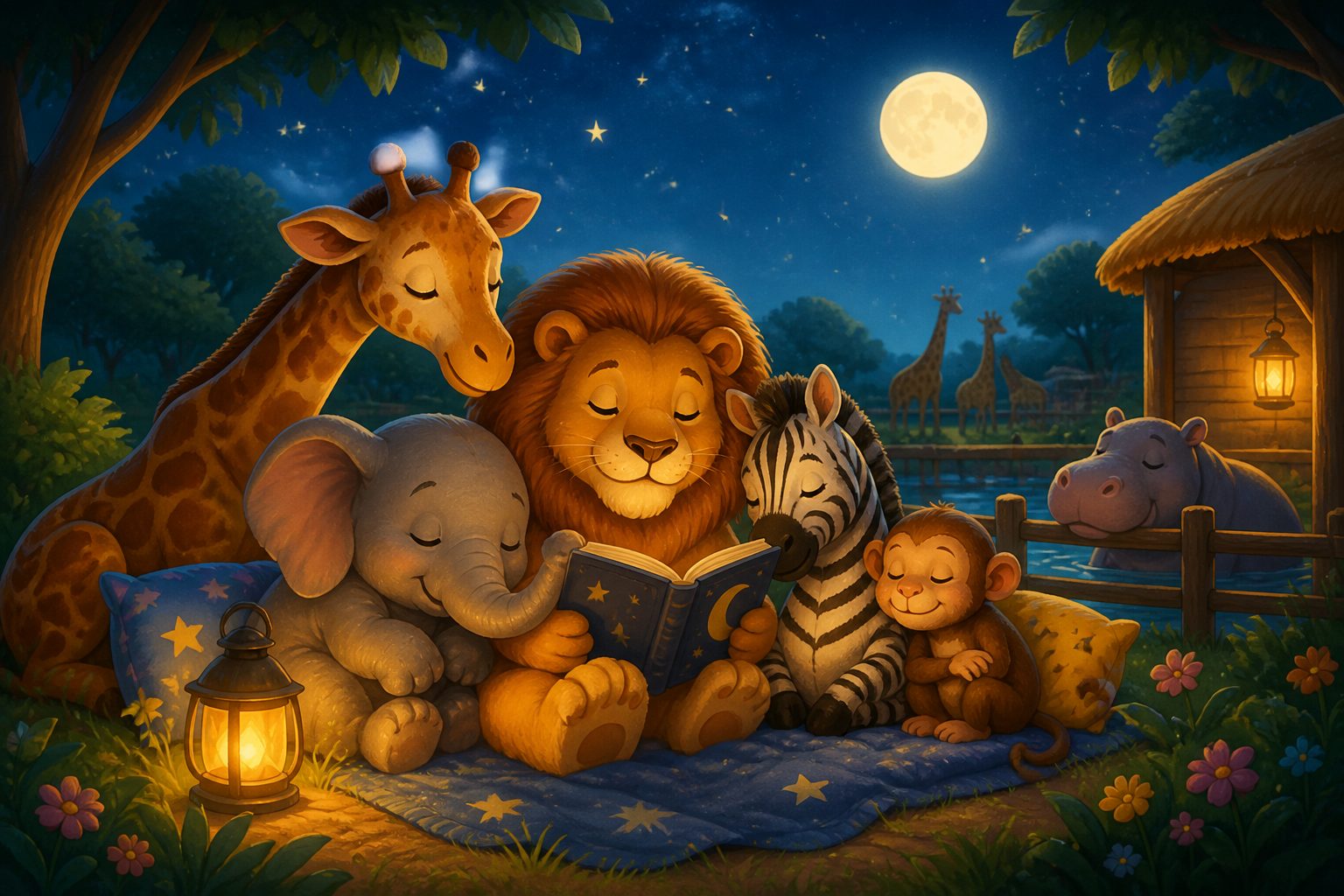
Down by the open grassy meadow, the elephant family gathered near a mountain of fresh golden hay. The biggest elephant gave a long, slow yawn that ruffled the grass around her feet. Her massive legs were tired from a long day of walking and splashing in the watering hole. Slowly, gently, she folded her heavy knees and rested her side against the soft, warm hay. She let out a long breath through her trunk, a deep sigh that sounded like the wind. Her long eyelashes fluttered closed, and she was fast asleep.

Along the winding path, the tall monkey trees were growing still. During the afternoon, the branches had bounced with chatter and swinging games. But now, the little monkeys climbed into the highest, safest forks of the branches. They sat close together, wrapping their soft furry arms and long tails around one another like warm blankets. The gentle night breeze rocked the high branches back and forth, slowly swaying like a quiet cradle. One by one, the little monkeys tucked their chins into their chests and began to dream.

Past the tall trees, the smooth pond rested under the silver evening stars. The water was dark, warm, and completely still. Two heavy hippos walked slowly into the shallow edge of the pool. With a quiet splash, their round bodies sank down into the soothing water until only their sleepy eyes and nostrils rested above the surface. They breathed out soft, bubbling sighs, sending tiny ripples across the calm water. The cool pond cradled them gently as they drifted into rest.

Across the path stood the tall giraffes under the acacia trees. They had spent the whole sunny afternoon stretching their long necks to nibble sweet green leaves. Now, their long legs stood still in the soft clover. Slowly, one giraffe curved his long, elegant neck around, resting his head softly against his own warm back, using his body like a pillow. He took one slow, quiet breath of the cool evening air and closed his eyes.

Up on the sunny hill, the lion pride rested on the wide, flat boulders. The large stones were still holding the warm heat from the afternoon sun. The father lion stretched his giant front paws forward and let out a giant, sleepy yawn. He did not need to run, hunt, or roar tonight. He rested his heavy chin on his front paws. In and out, his broad chest rose and fell in a steady, calming rhythm.

The entire animal park was wrapped in a quiet blanket of night. The elephants were warm in their hay, the monkeys were rocking in the trees, the hippos were floating in the still water, the giraffes were resting their long necks, and the lions were snoozing on the warm rocks.

The silver moon rose high in the sky, watching over all the sleeping creatures. Everything was safe. Everything was peaceful. It was time for sleep.

Why Animal Bedtime Stories Help Children Wind Down

Storytelling works as a natural bridge between waking thoughts and dreamland. When bedtime stories feature animals preparing for sleep, they offer subtle cues that help children relax both mentally and physically.

Modeling Rest as a Natural Choice

Young children often resist bedtime because they view sleep as an interruption to their fun. They worry they are missing out on activities while they are tucked in bed.

Zoo stories gently challenge this feeling by showing that rest is not a chore or a punishment. It is something every living creature welcomes. When a child hears that even a fierce lion or a massive elephant willingly lies down to rest, sleep feels natural, desirable, and safe.

Sensory Grounding and Progressive Relaxation

The best zoo bedtime stories lean heavily on physical, sensory descriptions. Notice how the story describes the weight of the elephant, the gentle rocking of the monkey branches, and the warm stones under the lion.

As you read these descriptions, your child naturally begins to focus on their own physical comfort. They notice the weight of their blanket, the softness of their pillow, and the steady rhythm of their own breathing. This sensory focus draws their attention away from racing thoughts and anchors them in their physical space.

Story tip: When you read about an animal yawning or letting out a long breath, take an exaggerated, slow breath yourself. Children naturally mimic their parents, helping to slow their heart rate.

Real Animal Sleep Habits to Share with Curious Kids

Many children love learning real facts about wildlife. Sharing a few gentle truths about how animals actually sleep can turn story time into a cozy learning moment without overstimulating their imagination.

Here is a quick look at how different zoo animals rest in real life:

Animal Cozy Sleep Habit What Makes It Special
Sea Otters Holding paws while floating Keeps them from drifting apart in ocean currents
Elephants Leaning on trees or lying in soft dirt Sleep only two to three hours at night
Flamingos Balancing on one leg Conserves body heat while resting near water
Giraffes Resting their heads on their hindquarters Sleep in short naps of five to thirty minutes
Koalas Tucked into tree forks for up to twenty hours Wedged securely so they do not fall while snoozing
Gorillas Building a fresh nest of leaves every single night Creates a clean, soft mattress off the cold ground

Sharing these details in a quiet, hushed voice satisfies a curious child's questions while keeping the mood peaceful. You can ask your child which animal bed sounds the coziest to them before tucking them in.

Sensory Storytelling Techniques for Restless Bedtimes

Reading the words on the page is only half the experience. How you tell the story can make a big difference in how quickly your child relaxes. Here are simple techniques parents can use to enhance bedtime storytelling.

How to Pace Your Voice

  • Daytime: Fast, expressive, high energy
  • Evening: Slow, rhythmic, softening at the end of each sentence

Note: Rather than using sudden volume changes, aim for a gradual decrease in pace as the story nears its end.

The Lion Breath Technique

If your child is holding tension in their body or tossing and turning, introduce a gentle breathing game tied to the story. When you reach the part of the tale featuring the sleeping lion, invite your child to take a lion breath with you.

  1. Breathe in deeply through the nose, filling the belly like a balloon.
  2. Hold the breath for a quiet count of two.
  3. Release the breath slowly through the mouth with a soft, warm sigh, letting the shoulders drop completely into the mattress.
  4. Repeat two or three times until your child settles into their pillow.

Habitat Visualization

If your child struggles with bedtime worries or fear of the dark, use zoo habitats as a visualization exercise. Ask them to picture their bedroom as a safe, cozy animal den.

This framing reframes the dark bedroom from an intimidating space into a protective, comforting shelter.

Making Your Child the Hero of the Zoo Tale

While classic animal stories are wonderful, children light up in a distinct way when they hear a story created just for them. Putting your child at the center of the narrative turns bedtime from a standard routine into a memorable ritual.

What Makes Personalized Bedtime Stories Work

In our experience making personalized tales, what really makes a story land for a young child is the small, familiar details you include. When a child hears about a character who shares their name, hugs a plush bunny just like theirs, and wears yellow striped pajamas, their attention locks in immediately.

Kids react with genuine wonder when they see their own world reflected on the page. The moment they realize they are the one helping the zookeeper tuck in the baby animals, their excitement peaks softly, followed by a warm sense of contentment.

Speed matters at bedtime. When you need a story to settle an evening struggle tonight, you cannot wait weeks for a book to arrive. Storywish makes it simple to turn your child into the hero of an illustrated bedtime story in two to five minutes. You choose a character, describe the gentle zoo adventure you want to share, and receive an illustrated tale right when you need it. You can also read more about how to create personalized children's books.

Digital Reads Tonight, Printed Keepsakes for Later

Personalized storytelling serves two different, wonderful roles in a family:

  1. The Instant Digital Story: Ideal for tonight. You can tailor the plot to whatever happened during the day, such as a trip to the local petting zoo or a child who needs reassurance about sleeping in their own room.
  2. The Printed Keepsake Book: A physical picture book that arrives at your doorstep, ready to sit on the nursery bookshelf. It becomes a lasting keepsake of this specific age and stage, perfect for birthday gifts or holiday traditions.

Honest Care for Child Privacy

When creating personalized stories for young children, privacy and safety should always come first. Parents deserve total clarity about how their family information is handled.

With Storywish, parents remain in complete control of what details they share. Uploaded reference photos are not stored beyond what is needed to generate the story illustrations, family data is never sold or shared, and personal photos are never used to train creative models. If you ever want to learn more about how data is protected, the Parents Trust Center provides clear, straightforward details.

Note: A personalized story is meant to be a shared bonding experience between parent and child, complementing your family reading time with imagination and warmth.

Step by Step: Creating an Evening Zoo Routine

A predictable bedtime sequence helps children feel secure. Here is a simple, calming flow you can use to weave animal stories into your nightly schedule.

  1. Dim the Lights (Thirty minutes before bed): Lower the overhead lights in the living room and bedroom to signal to your child's body that nighttime has arrived.
  2. The Animal Tidy Up: Turn cleanup time into a gentle game. Have your child gather their toys and tuck them into their bins just like zookeepers putting the animals to bed.
  3. Pajama Den: Help your child change into comfortable sleepwear and climb into bed. Let them arrange their blankets and pillows into their own cozy sleeping nest.
  4. The Zoo Bedtime Story: Read the gentle animal story above, or create a personalized adventure starring your child as a helper walking through the quiet zoo at dusk.
  5. The Final Goodnight: Offer one slow lion breath together, whisper a soft goodnight to the elephants and monkeys, and turn out the main light.

Frequently Asked Questions

Why are zoo bedtime stories so effective for toddlers and young children?

Toddlers often find comfort in the predictable routines of animals. Hearing that large, powerful animals like lions and elephants willingly settle down for the night helps children accept bedtime as a normal, safe part of their day.

Can I read zoo bedtime stories if my child gets too excited by wild animals?

Yes, as long as the story emphasizes the quiet, sleepy side of the zoo rather than loud action or roaring. Focus on soft sounds, slow movements, and cozy sleeping spots rather than chasing or daytime play.

How can I make up my own zoo bedtime story on the spot?

Pick three calm animals, such as an elephant, a hippo, and a giraffe. Describe how each animal finishes their evening snack, finds a soft spot to lie down, and lets out a big, sleepy breath before closing their eyes.

How does Storywish help create personalized animal bedtime stories?

Storywish lets you describe your child and their favorite animals to create a gentle, illustrated story in just a few minutes. You can read the customized tale digitally right at bedtime or order a printed picture book version as a lasting keepsake.

Conclusion

Bedtime does not have to be a struggle between high energy and sudden silence. A soothing zoo bedtime story offers a warm, imaginative path to sleep, showing children that even the wildest creatures find peace when the stars come out.

Bottom line: A gentle walk through a sleepy animal park gives your child the comfort, security, and calm they need to drift happily into dreamland.

If you are ready to make story time truly magical tonight, create a personalized story and watch your little one become the hero of their very own bedtime adventure.


Want to make your own personalized AI children's story? Try Storywish free.

Related posts