Discover the best bedtime story for toddlers to soothe your little one. Learn how to create calming routines and personalized tales for a peaceful night.

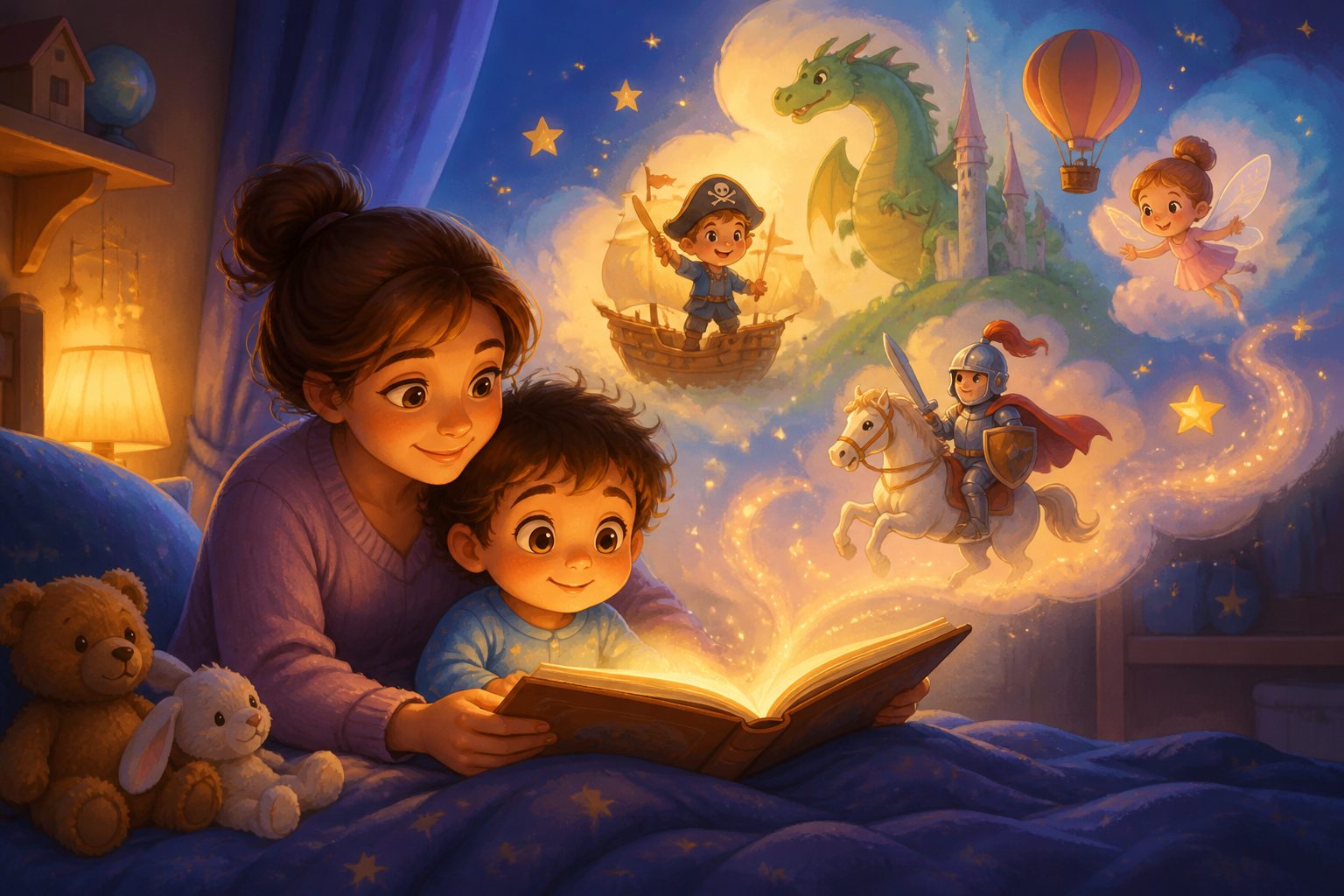
Bedtime with a toddler is often a balance between boundless energy and sudden tiredness. One minute your little one is running across the rug in footie pyjamas, and the next, they are rubbing their eyes and asking for their favorite blanket. In these tender evening moments, a bedtime story for toddlers serves as a bridge between a busy day of exploring and a peaceful night of rest.
Sharing a quiet book before sleep is one of those simple routines that tends to bring comfort to everyone involved. Storywish helps parents shape personalized tales in minutes, turning everyday evening wind down routines into gentle adventures where your toddler sees their own world reflected on the page. Here is a thoughtful guide to choosing, creating, and sharing evening stories that soothe your child and make bedtime feel like the warmest part of the day.
Reading to a two or three year old is quite different from reading to an older child. Toddlers experience the world through rhythm, simple patterns, and vivid visual cues. When the day winds down, their busy minds need stories that calm the senses rather than rev them up.
During the day, excitement and big adventures are wonderful. At night, high stakes and dramatic surprises can make it harder for little bodies to settle. Toddler stories work best when the plot follows a gentle slope toward quietness.
Stories that end with characters yawning, tucking into bed, or watching the stars appear provide a natural cue for sleep. Many parents find that when the hero of the story closes their eyes, their little listener often feels ready to do the exact same thing.
Toddlers love predictability. When phrases repeat across pages, children feel a sense of mastery and safety. Hearing the same soothing refrain gives them something comfortable to hold onto as the room grows quiet.
Rhythmic language also has a naturally hypnotic quality. Soft rhymes and melodic sentence structures help slow down breathing and signal to an active toddler that it is time to relax.
Story tip: Try lowering your voice and slowing your reading pace slightly with each turn of the page. This subtle shift helps cue your child that the story is winding toward sleep.
At this age, the ordinary world is completely fascinating. Toddlers do not need complex fantasy worlds to be engaged. They find immense joy in hearing about:
When a story mirrors their own daily experiences, toddlers feel understood and secure.
As parents who have navigated our fair share of evening negotiations and sleepy cuddles, we have noticed something special about how young children interact with nighttime tales. The magic of a personalized story for a toddler rarely comes from complicated twists. It comes from the immediate joy of recognition.
When a toddler hears their own name alongside their favorite stuffed bunny, their eyes light up with quiet delight. They do not just listen to the story; they feel rooted inside it. We have found that the small, real details parents share, such as a favorite yellow cup, a pet cat who sleeps at the foot of the bed, or the funny way a child says goodnight, are what turn a simple tale into a treasured memory.
Speed also matters at bedtime for a very practical reason. Toddler moods change quickly from evening to evening. A story that is ready in two to five minutes allows you to follow the exact mood your child is in tonight. If they spent the afternoon splashing in puddles, a quick, calming tale about sleepy rainclouds meets them right where they are, rather than relying on a book picked out weeks ago.
| Story Element | Daytime Reading | Bedtime Reading for Toddlers |
|---|---|---|
| Plot Pace | Fast, exciting, energetic | Slow, steady, comforting |
| Conflict | Fun challenges and silly surprises | Low stakes, gentle resolutions |
| Art and Imagery | Bright, active, dynamic | Soft, warm, cozy tones |
| Language Style | Question prompts and silly noises | Repetitive refrains and quiet rhythms |
| Ending Goal | Spark curiosity and daytime play | Cue physical rest and sweet dreams |
If you are looking for fresh ideas for your evening reading ritual, these five gentle themes are wonderful for helping little ones unwind.
Animal stories are a timeless favorite for very young children. In this theme, the story visits various friendly creatures as they prepare for sleep.
The little brown bear crawls into a warm cave with his mama. The bluebird tucks her head beneath her soft wing. The little frog rests on a wide green lily pad while the pond water ripples gently. Visiting each sleeping animal gives toddlers a repetitive, soothing pattern that reinforces how natural and sweet sleep is for every creature.
Follow a fluffy white cloud drifting across a twilight sky. Along the way, the cloud floats over quiet hills, sleepy towns, and calm blue oceans, watching lights turn off one by one.
This theme encourages gentle breathing. As the cloud glides slowly through the sky, you can encourage your toddler to take slow, deep breaths with you, imagining themselves floating softly on a warm, pillowy cushion.
Toddlers spend their days surrounded by their favorite toys. A story about the toys packing away and settling in for the night can make the end of play time feel comforting rather than disappointing.
The wooden train rests quietly on its tracks. The building blocks cuddle together in their basket. The beloved plush puppy finds its spot right beside your toddler on the pillow. This theme reassures young children that their playthings will be resting safely and waiting for them when morning comes.
A tale focused on the moon watching over the world offers deep comfort to children who might feel unsure about the dark. In this story, the moon is a kind, glowing guardian who turns on its soft light so the world can rest peacefully.
The moon smiles down at the garden flowers closing their petals, shines softly through the bedroom window, and promises to keep watch until the warm sun returns.
A slow moving, rhythmic train that travels through dreamland is a wonderful vehicle for repetitive storytelling. The train gently chugs along soft tracks, making quiet sounds like click clack, click clack, time to sleep.
With each station, the train lets off a little yawner: a sleepy lamb at Clover Station, a resting puppy at Meadow Lane, and finally, your child at Cozy Pillow Stop.
Key takeaway: Shorter, gentler stories with predictable rhythms work far better at bedtime than dramatic plots. A low conflict, peaceful ending helps a toddler feel safe enough to let go of the day.
A bedtime story is most effective when it is part of a predictable evening rhythm. Toddlers thrive when they know what to expect next, as familiar routines reduce evening resistance and soothe overtired nervous systems.
Begin lowering the lights around the home about thirty minutes before reading time. Turn off bright overhead bulbs in favor of soft bedside lamps. This gradual dimming helps signal to your toddler's body that the day is coming to a close.
Put away noisy electronic toys and turn off television screens before story time begins. A quiet room allows your child to focus fully on the warmth of your voice and the pictures in the book.
Whether it is a rocking chair, a pile of soft floor cushions, or snuggling under the covers in bed, having a consistent reading spot creates an immediate association with calm and comfort. Let your toddler bring one favorite blanket or stuffed animal to hold while you read.
Giving a toddler too many choices can sometimes lead to decision fatigue or stall tactics. Offer a choice between two calming stories: "Would you like the sleepy bear story tonight, or the little moon train?" Two choices give your child a sense of autonomy without overwhelming them.
Once the story ends, close the book gently and transition directly to your final sleep cues, such as a short lullaby, a back rub, or a quiet goodnight phrase spoken the same way each evening.
Even with the best routines in place, toddler bedtimes can occasionally have bumpy moments. Here is how to navigate common evening hurdles with patience and warmth.
It is completely normal for toddlers to ask for another book to keep the connection going. Sticking to a kind, clear boundary helps them feel secure.
Toddlers are still developing their ability to sit still. If your child wants to flip pages quickly or point at random illustrations instead of listening to every word, that is completely fine.
Follow their lead rather than forcing every sentence. Talk about the pictures they point to: "Yes, look at that sleepy little bunny's brown ears." Engaging with the artwork and enjoying your closeness is just as valuable as hearing the written text.
When a child is overtired, their body often produces extra energy, making them appear wide awake when they actually need sleep urgently.
On these nights, long stories can cause frustration. Choose a very short, three to five minute tale with minimal words per page. Focus on physical touch, like resting a warm hand on their back and speaking in a low, soothing whisper to help their nervous system settle.
Modern parents have more options than ever for bringing stories into the bedroom. Knowing when to use different storytelling formats can make your evenings smoother and more special.
There are evenings when your child asks for a story about something highly specific, like a green tractor that helps a lost kitten find its way home. Using Storywish allows parents to generate an illustrated, personalized tale in about two to five minutes.
Parents remain completely in control of the themes, art style, and characters, ensuring the story remains gentle and age appropriate. You can edit the text page by page or read along as each word is highlighted. Because we believe in total transparency and family safety, Storywish is designed with parents in mind: uploaded photos are not stored beyond generating the story, family data is never sold or shared, and personal photos are never used to train AI models. For deeper details on how we handle your child's photo, parents can always visit the Parents Trust Center.
While a quick digital story is wonderful for addressing tonight's sudden interest, physical printed books hold a timeless place in toddler bedtimes. Turning paper pages helps develop hand coordination and provides a screen free, sensory experience that prepares little eyes for darkness.
Printed personalized picture books, which can be ordered through paid plans with custom dedications, make memorable keepsakes for birthdays, holidays, and milestones. Having a physical book on the shelf starring your toddler allows them to return to their favorite adventure night after night. You can explore printed picture books to see how digital stories can become physical keepsakes.
Note: A combination of quick digital tales for new daily adventures and printed keepsake books for your regular bedside shelf gives families the best of both worlds.
Sharing bedtime stories with your toddler is about far more than just helping them fall asleep. These quiet moments build the foundation for a lifelong relationship with books, language, and imagination.
When children associate stories with safety, warmth, and the undivided attention of the people they love most, reading becomes a source of comfort rather than a chore. As your toddler grows into a preschooler and beyond, the cozy memories of resting their head against your shoulder while listening to a soothing tale will remain one of their earliest and sweetest childhood impressions.
Storywish makes it simple to bring that wonder to life, turning your child's favorite everyday moments into personalized tales you can read together tonight or treasure forever in print. When you are ready, you can create a personalized story for your next bedtime routine.
For children between ages two and four, stories that take roughly three to seven minutes to read tend to work best. This length holds their attention without overtiring them or extending bedtime too long. If your child is especially sleepy, a shorter tale with rich pictures is ideal.
If sitting in bed feels too restrictive for an active toddler, try sitting together in a cozy floor spot with dim lighting. Let them hold a favorite soft toy while you read. Keeping the environment calm and your voice quiet will naturally encourage them to slow down and transition toward bed.
Storywish is built by parents who understand the need for wholesome, gentle content. Parents guide the character traits, art style, and storyline, and can review and edit each page before reading. Uploaded reference photos are not stored beyond generating the story, data is never shared or sold, and no photos are used to train AI models. Read the guide to AI safety for children's storybooks for more information.
Both formats have wonderful benefits. Digital stories created on demand are fantastic for matching your child's exact mood or daily experiences in minutes. Physical printed books offer a screen free, tactile experience that helps little ones wind down. Many families enjoy creating stories digitally and ordering their favorites as printed keepsake books.
Want to make your own personalized AI children's story? Try Storywish free.

August 26, 2026 · Discover the perfect bedtime story for 8 year olds. Learn how to balance engaging plots with calming endings to help your child relax and drift off.

September 02, 2026 · Calm your child with a gentle raccoon bedtime story. Discover soothing tales and creative ideas to turn nighttime curiosity into peaceful dreams tonight.

August 30, 2026 · Discover the magic of a fairy tale bedtime story. Learn how to transform classic tales into gentle, personalized adventures that soothe your child to sleep.

August 29, 2026 · Turn holiday excitement into peaceful sleep with a calming elf on the shelf bedtime story. Discover gentle tales and tips for a restful routine.