Duck Bedtime Story: Puddle and the Boat with No Name
Read an original duck bedtime story about naming a model boat. Find three more ideas, simple adaptations, and a prompt for a personalized illustrated tale.
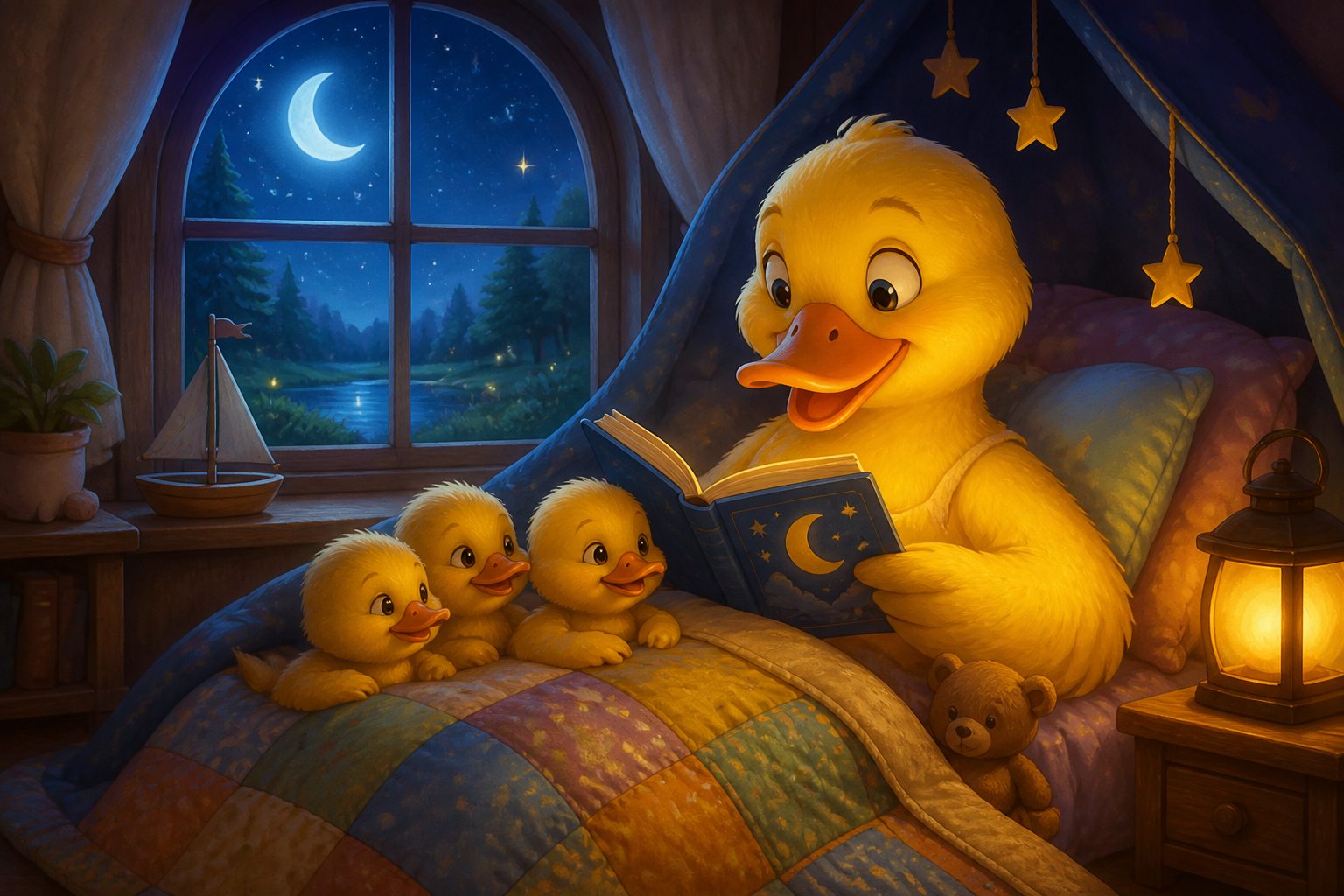
A duck bedtime story can follow a tiny adventure with a clear ending. In the original tale below, a duck named Puddle helps name a little boat—and learns that two friends can choose something better together.
At a glance: Read “Puddle and the Boat with No Name,” adapt its details, or try three more duck story ideas. This is an imaginary animal village, with talking characters and a small model boat.
Read aloud: Puddle and the Boat with No Name
Puddle the duck had made a little boat from a fallen piece of bark. A leaf stood upright as its sail, and a smooth pebble rested inside to keep it balanced.
His friend Lark, a storybook mouse, came to see it.
“What is it called?” she asked.
Puddle looked at the boat. He had chosen the bark. He had chosen the sail. He had chosen the pebble. But he had not chosen a name.
“Perhaps Swift,” he said.
They set the little boat in a shallow stone basin in the village garden. It moved slowly from one side to the other.
“Not very swift,” Lark said.
“Perhaps Giant.”
Lark placed her small paw beside it. The boat was shorter than her paw.
“Not very giant,” she said.
Puddle frowned. “It needs a good name.”
“What does it do?” Lark asked.
Puddle watched the leaf sail turn. The boat crossed the basin and touched the opposite edge.
“It carries a pebble,” he said. “It goes from here to there.”
Lark smiled. “Then perhaps Here-to-There.”
Puddle tried saying it. “The Here-to-There.”
It sounded like a boat that knew exactly what it was for.
They drew a small sign on a scrap of paper: HERE-TO-THERE. Puddle propped it beside the basin so the boat did not have to carry it.
A breeze turned the sail again. The boat drifted back toward them.
“Now it's going from there to here,” Lark said.
“Still the same boat,” Puddle replied.
They watched one more crossing. Then Puddle lifted the boat onto the garden table, where its sail could dry. Lark tucked the paper sign beneath a little stone.
“Tomorrow, we can try a different sail,” she said.
Puddle nodded. “But we'll keep the name.”
They followed the path through the village. Lark went to her little house beside the gate. Puddle went to his home under the willow.
The boat rested on the table. Its journey was finished for the evening. From here to there, and back again, had been enough.
Adapt the story together
Let your child suggest a boat name before Puddle and Lark choose theirs. You can use the suggestion in the ending, or enjoy hearing the different possibilities.
Change the sail's shape, the village's name, or the model boat's passenger. A button, a paper flag, or a toy figure can replace the pebble in the imaginary boat.
For a shorter telling, offer two names rather than three. For a longer version, let each friend explain a favorite name before they agree. The little boat remains a model; neither character needs to climb aboard.
Three more duck story ideas
The postcard on the wrong shelf
A fictional duck receives a postcard addressed to the neighbor next door. They deliver it and learn about the picture on the front. The neighbor helps them write a reply.
The bench with room for two
A duck paints a tiny garden bench. A friend asks whether there is room for another pattern. They choose two colors and finish the design together.
The duck in the drawing
A child draws a duck but cannot decide on the background. They try a pond, a garden, and a patch of sky. The final picture combines one detail from each idea.
Give each plot a small question or choice, then answer it. A missing name or a shared design can hold a story together without a lost animal or a threatening journey.
Share the tale in your own voice
Read the dialogue at a pace you and your child enjoy. You can use different character voices or keep them the same. There is no need to pair the story with a breathing exercise or to imitate a sleep rhythm.
If your listener likes joining in, repeat “from here to there.” If they prefer to listen, read straight through. Talk about the pictures or change a detail when that makes the time together more enjoyable.
The talking duck and mouse belong to the invented village. If your child wants to learn about real ducks, choose factual material separately rather than treating the story as a description of wildlife behavior.
Create a personalized duck story
Start your own illustrated duck tale with this prompt:
Write a short story set in an imaginary animal village. A duck named [name] and a friend choose a name for a small model boat. Include [favorite color] and a gentle joke. Keep the boat a model, let both friends contribute, and end with their choice made and everyone home.
Use Storywish's character creation guide to shape the cast. Review the generated words and images before reading. A favorite digital tale can become a printed softcover book with a dedication.
Frequently asked questions
Can a toy duck be the main character?
Yes. Set the story in a toy village or make the whole adventure a child's imagined tale. A familiar toy can give you an easy starting point.
Do duck stories need quacking sound effects?
No. Use them if your child enjoys them, or let ordinary dialogue carry the story.
How can I make a duck story shorter?
Keep one setting, one question, and one answer. In Puddle's tale, that means making the boat, choosing its name, and putting it away.
Will a pond story help every child sleep?
No setting guarantees a sleep result. Choose the tale for its characters and the shared reading experience.
Want to make your own personalized AI children's story? Try Storywish free.
Related posts

The Magic of a Snowman Bedtime Story
September 10, 2026 · Read an original snowman bedtime story about choosing a name. Find winter plot ideas, simple ways to personalize the tale, and a prompt for a keepsake book.
Unicorn Bedtime Story: Lumina and the Sunset Ribbon
September 09, 2026 · Read a gentle unicorn tale about a magical sunset ribbon. Explore five story prompts, simple adaptations, and ideas for a personalized illustrated story.
Whale Bedtime Story: Nori and the Returning Note
September 09, 2026 · Read an original whale bedtime story about an echo in a quiet bay. Explore ocean plot ideas, a simple whale fact, and a prompt for your own illustrated tale.
Tooth Fairy Bedtime Story: A Magical Guide for Parents
September 07, 2026 · Read a gentle tooth fairy story about a tiny letter. Adapt the tradition for your family, explore story ideas, or create a personalized milestone keepsake.