Personalized Pet Books: Put Your Furry Friend in the Story
Create a personalized pet book with familiar details, three story ideas, and a practical review checklist. Read digitally or choose a softcover keepsake.
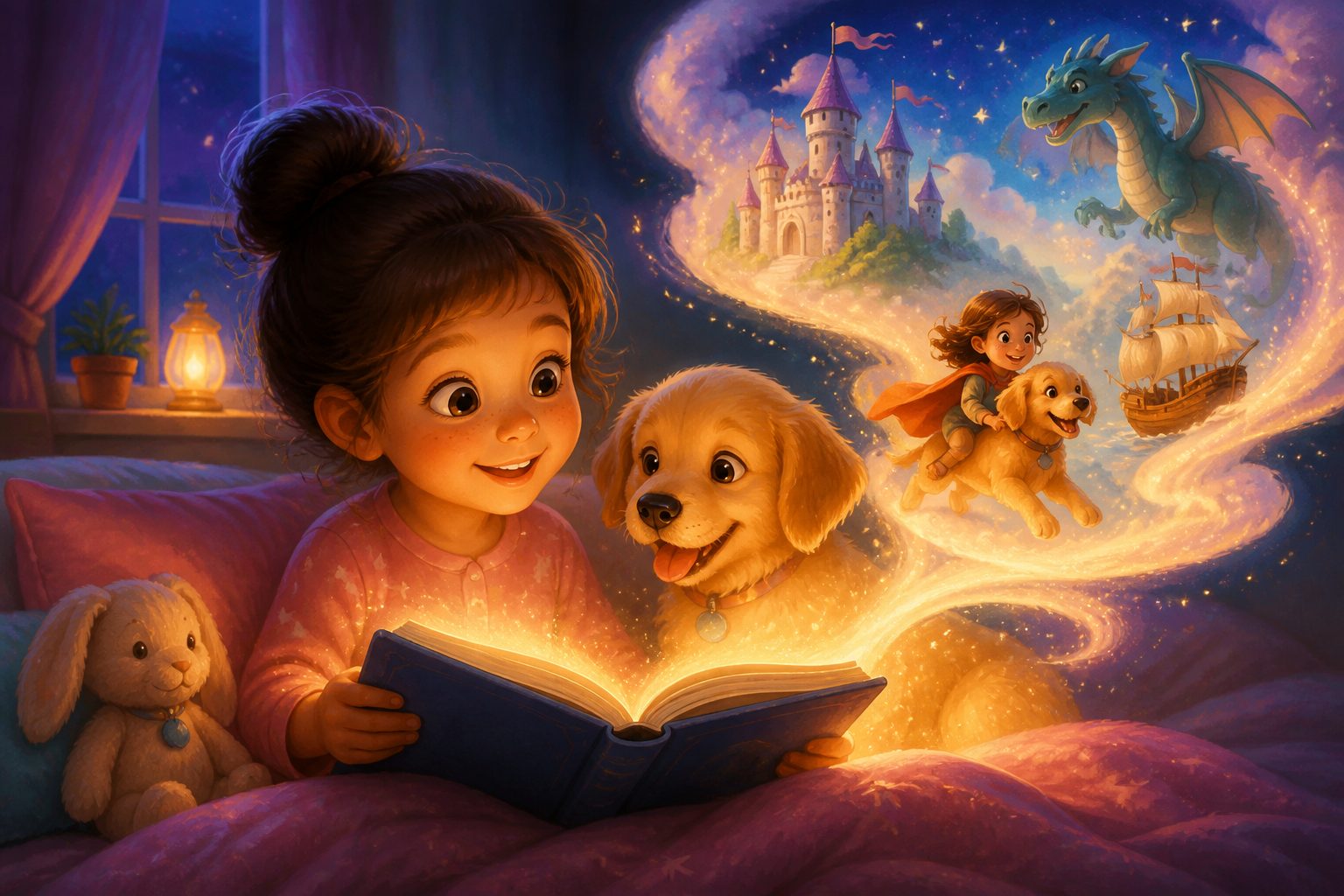
A personalized pet book turns a familiar animal into a story character: the cat who chooses the smallest box, the dog with one white paw, or the rabbit who waits beside the breakfast table. The most useful details are the ones your child already recognizes.
At a glance: Choose a simple adventure, include a few real pet details, and review both the words and illustrations before sharing the book. Storywish lets you create characters from a photo, sketch, or description, then read digitally or order a softcover keepsake.
What to personalize beyond a pet's name
Start with three details rather than a long biography. A distinctive feature helps shape the illustrations, a familiar habit gives the character personality, and a favorite place supplies the setting.
| Detail | Example | How it helps the story |
|---|---|---|
| Appearance | A black cat with a white chin | Gives you something specific to check in the pictures |
| Habit | Carries a toy to the door | Suggests a small task or recurring joke |
| Favorite place | The sunny window seat | Creates a recognizable opening and ending |
| Relationship | Follows your child around the garden | Gives the two main characters a shared activity |
Describe the features you want, but check the result rather than expecting an exact portrait automatically. AI-generated illustrations may need adjustment, especially for unusual markings. A book can also use an invented animal if your child would rather imagine a pet than feature a real one.
Three pet story ideas to adapt
The missing blue sock
Nora is getting ready for a picnic, but one blue sock has disappeared. Her dog, Pip, carries a soft bundle to his basket. Nora follows a trail of harmless clues: a slipper by the sofa, a ribbon beside the door, and finally the sock tucked under Pip's toy. She puts her clothes away and gives Pip his own blanket to carry.
Personalize the missing item, the rooms, and the pet's habit. Keep the search small; the animal does not need to run away or face danger to make the story interesting.
The cat's smallest castle
A child builds a grand cardboard castle with towers and flags. Their cat ignores it and settles into the tiny box that held the tape. The child makes the little box into a courtyard, adds a paper flag, and discovers that a good castle is the one its resident enjoys.
This works well for a playful daytime story. Add your own cat's name and favorite sleeping position. Talking animals and royal titles can stay clearly within the pretend adventure.
The last garden delivery
A child and their pet carry imaginary invitations to a garden gathering. They deliver one to the old flowerpot, one to the apple tree, and one to a toy resting on the bench. At the end, they put the invitations away and return to their own comfortable places indoors.
For an evening version, use a short route and finish the task before the final page. For a livelier version, let the pet suggest unexpected guests.
Turn a real memory into a story
A memory often provides a better starting point than a complicated plot. Think of the first day the pet came home, a favorite walk, or a funny moment with a toy. Choose one event and decide what you want to preserve.
Keep a real memory recognizable by separating it from the invented adventure: “After their usual walk, Milo imagined that the park had become a moon garden.” That transition lets the book celebrate your family while making the fantasy clear.
If the book is a gift, ask the recipient for a suitable photo or description and check the spelling of the pet's name. A dedication can explain the occasion in one sentence: “For Eva and Pepper, whose little adventures make ordinary afternoons special.”
Create and review a pet book in Storywish
- Build your characters. Use a photo, sketch, or written description. Include the child and pet if both belong in the story. See the character creation guide for the available controls.
- Describe one adventure. Specify the setting, the pet's habit, and the ending you want. Mention whether the animal talks or behaves like a real pet.
- Review every page. Check names, appearance, continuity, and anything that does not fit your family. Adjust the text or images before reading it together.
- Choose the format. Read the digital story or preview a printed softcover book. Check the dedication, layout, and current order details in the printing guide.
Share only the details needed for your story. You can begin with a written character description if you prefer not to upload a photo. Read the current privacy policy for information about data use and service providers.
Make the book work for your reader
For a child who prefers short stories, use one place, one task, and a clear ending. For a reader who likes mysteries, add a few clues they can spot in the pictures. You can read aloud, take turns, or simply talk about a favorite illustration; the book does not need to become a reading exercise.
Treat the softcover as a picture book to share, rather than a chewable or washable board book. If you want general ideas for reading together, Reach Out and Read's family resources offer a useful starting point.
Start your own pet adventure
Create a personalized pet story with a prompt like this:
Write a short illustrated story about [child's name] and [pet's name], a [description] who loves [habit]. They look for [ordinary missing item] around [familiar place]. Keep the search friendly, let both characters contribute, and end with everyone comfortably at home. The pet [does/does not] talk.
Frequently asked questions
Do I need a pet photo?
No. You can start with a written description or a sketch. A photo can provide a visual reference, but you should still review the generated illustrations.
Can I make the pet the only main character?
Yes. Describe an animal-led adventure, or include a child as a companion if that better suits the gift.
Can I print the story?
Storywish offers a printed softcover option. Preview the pages and check current ordering information before purchasing.
Will a personalized pet book make my child enjoy reading?
It gives you a familiar subject to share, but children have different interests. Let your child choose whether they want a pet story, another theme, or a favorite book they already know.
Want to make your own personalized AI children's story? Try Storywish free.
Related posts
The Magic of Personalized Baby Books for Little Ones
September 09, 2026 · Choose a personalized baby book with clear format advice, family story ideas, and dedication examples. Review a digital story before ordering a softcover gift.
Personalized Books for Dad: Meaningful Keepsakes for Bedtime
September 09, 2026 · Make a personalized book for Dad with family story ideas, dedication examples, and tips for reviewing your digital story and ordering a softcover picture book.
Personalized Books for Toddlers
September 07, 2026 · Choose personalized books for toddlers with advice on simple stories, clear pictures, and softcover keepsakes. Review the book before ordering a family gift.
Personalized Books for Boys: A Guide for Parents
September 07, 2026 · Choose personalized books for boys around their interests. Explore story ideas, parent review tips, and digital or softcover gift options with Storywish.