Personalized Books for Brothers: Meaningful Stories for Siblings
Create a personalized book for brothers with balanced roles, sibling story ideas, and dedication tips. Review the digital story and order a softcover gift.
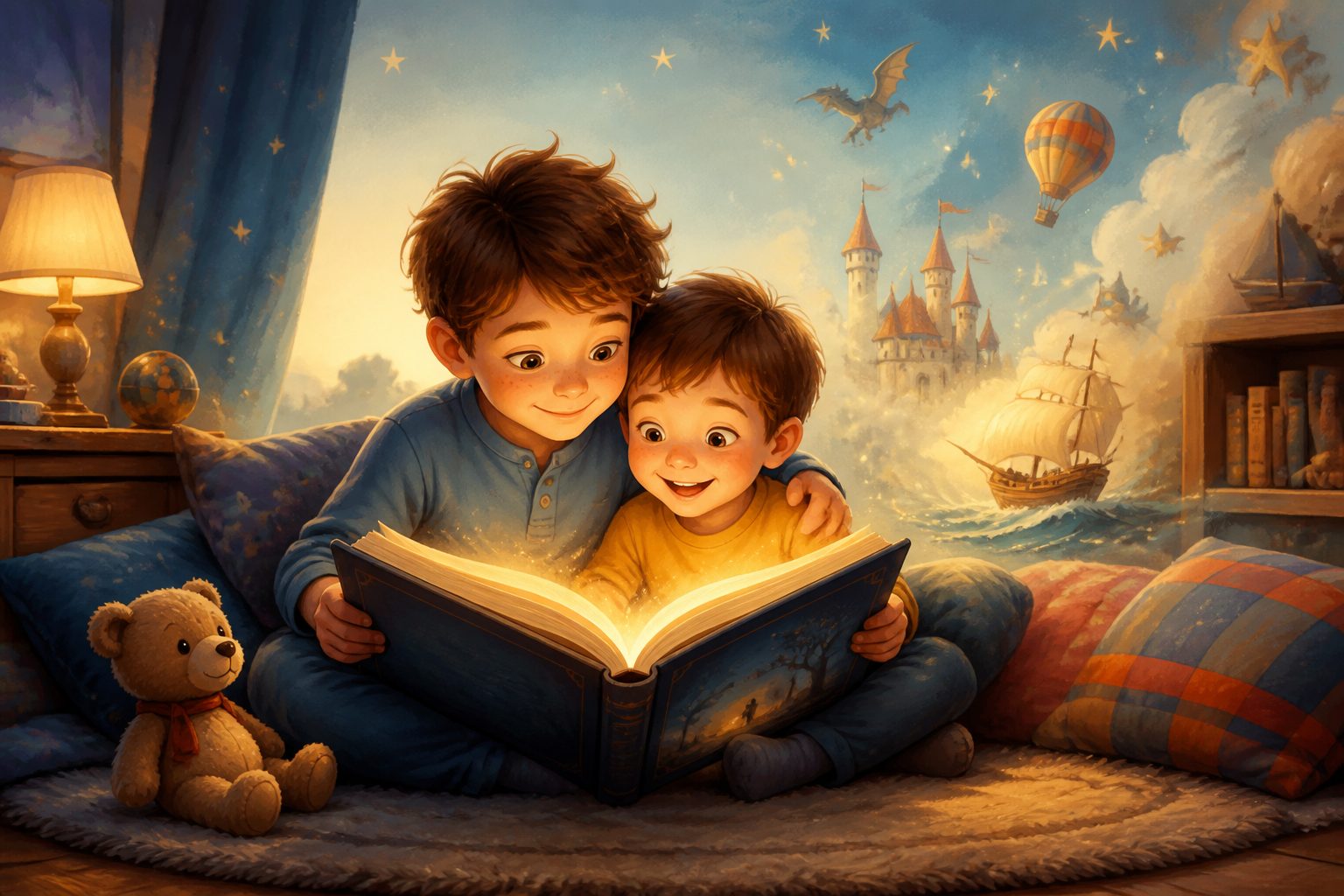
A personalized book for brothers should give both children a reason to be in the story. Choose a task they can complete together, add a few details that distinguish them, and check that one brother is not always the helper while the other gets every important moment.
At a glance: Build the story around two contributions to one shared goal. Adapt the roles to the children's actual ages and interests. Review the digital version before ordering a softcover picture book with a dedication for both brothers.
Begin with the relationship you have
Brothers do not have to share the same interests or enjoy every activity together. A story can show disagreement, a changed plan, and a fair compromise without turning either child into the difficult one.
Write down one detail for each brother: a favorite object, an activity he chooses, or a phrase he uses. Add something they share, such as a picnic spot or an imaginary game.
Use these as story details rather than fixed labels. If one brother often notices things, let him miss a clue once. If the other likes building, let him ask for advice. Both characters can learn and make decisions.
Three plots that need both brothers
The blanket-fort reading room
The brothers want to make a place for their toys to read. One draws a plan with a wide doorway; the other notices that the doorway is where the blanket keeps slipping. They revise the plan together, build a lower entrance, and carry in two cushions.
Give each child a turn: One proposes the first idea. The other identifies the practical problem. Both help choose the solution.
The paper-boat delivery
The brothers make a paper map of an imaginary river and a boat to carry invitations along it. One designs the route; the other writes symbols on the envelopes. When the map ends too soon, they add one last bend together and deliver the final invitation.
Keep the task manageable: The adventure can happen on a tabletop in the story. It does not need a dangerous crossing to feel like a quest.
The missing costume button
A robot costume loses a button before a family play. One brother remembers where they tried it on; the other finds the button beneath a chair. They ask an adult to attach it, then choose a part for each child in the performance.
Make the recognition specific: Include the actual costume color or a favorite family joke. Let the older child receive help as well as give it.
Adjust for age gaps, twins, or a new baby
| Family situation | A useful story choice | Avoid |
|---|---|---|
| Brothers close in age | Different jobs with equal importance | Giving every clever idea to the same child |
| A larger age gap | A shared goal with tasks each child can manage | Assuming the older child must lead every scene |
| Twins | Separate names, preferences, and choices | Treating the pair as one character |
| A new baby brother | A small moment of welcome, with an adult present | Asking the older child to manage the baby's care |
For a new baby, a story might follow the older brother choosing a song to sing while a parent holds the baby. Leave room for mixed feelings. The child can be curious and unsure at the same time; the plot does not need to end with him enjoying every change.
Check whether the spotlight is balanced
Read the draft and mark each moment where a child makes a decision, solves a problem, or gets a line of dialogue. If nearly every mark belongs to one brother, revise the plot.
Also check the illustrations. Both children should remain recognizable, and their objects should not swap owners from page to page. Pay attention to name spelling and to scenes where one character accidentally disappears.
If you are giving the book as a gift, write the dedication to both children:
For Adam and Nico, who always find another way to build the fort. Love, Grandma, September 2026.
You can create separate stories later if the children want different adventures. A shared book does not need to carry every interest either child has.
Share the reading without making it a lesson
Offer one child the first choice of story and the other the first turn at a question, then swap another evening. Let them comment without requiring a discussion about how good brothers behave.
The American Academy of Pediatrics encourages reading together and talking about stories. A sibling story is a reading activity; it does not guarantee less rivalry or a particular relationship outcome.
Make the book with Storywish
Start a story for the brothers with a prompt that names their separate contributions:
Write a picture-book story starring [brother one] and [brother two]. They build a blanket-fort reading room. [Brother one] draws the first plan; [brother two] notices why the doorway slips. They choose a new plan together. Include [personal detail for each child]. Give both brothers dialogue and finish with the fort ready to use.
Use the character guide to build the cast. Storywish supports up to four characters in one story, so choose the people essential to this adventure. Review every page before sharing it, and consult the AI safety guide and privacy policy.
For a physical gift, Storywish prints softcover picture books. Add a dedication for both children and use the print preview before placing an order.
Frequently asked questions
Can brothers of different ages share a story?
Yes. Choose a task with different kinds of contribution, and adjust the language to the children who will listen or read.
Can a parent or pet appear too?
Yes, within the four-character cast limit. Keep the cast small enough that the brothers remain central.
Does the story have to be about teamwork?
No. It can be a shared joke, a family memory, or two different adventures that meet at the end. Both children should still be represented clearly.
Want to make your own personalized AI children's story? Try Storywish free.
Related posts
Personalized Books for Dad: Meaningful Keepsakes for Bedtime
September 09, 2026 · Make a personalized book for Dad with family story ideas, dedication examples, and tips for reviewing your digital story and ordering a softcover picture book.
The Magic of Personalized Baby Books for Little Ones
September 09, 2026 · Choose a personalized baby book with clear format advice, family story ideas, and dedication examples. Review a digital story before ordering a softcover gift.
Personalized Books for Toddlers
September 07, 2026 · Choose personalized books for toddlers with advice on simple stories, clear pictures, and softcover keepsakes. Review the book before ordering a family gift.
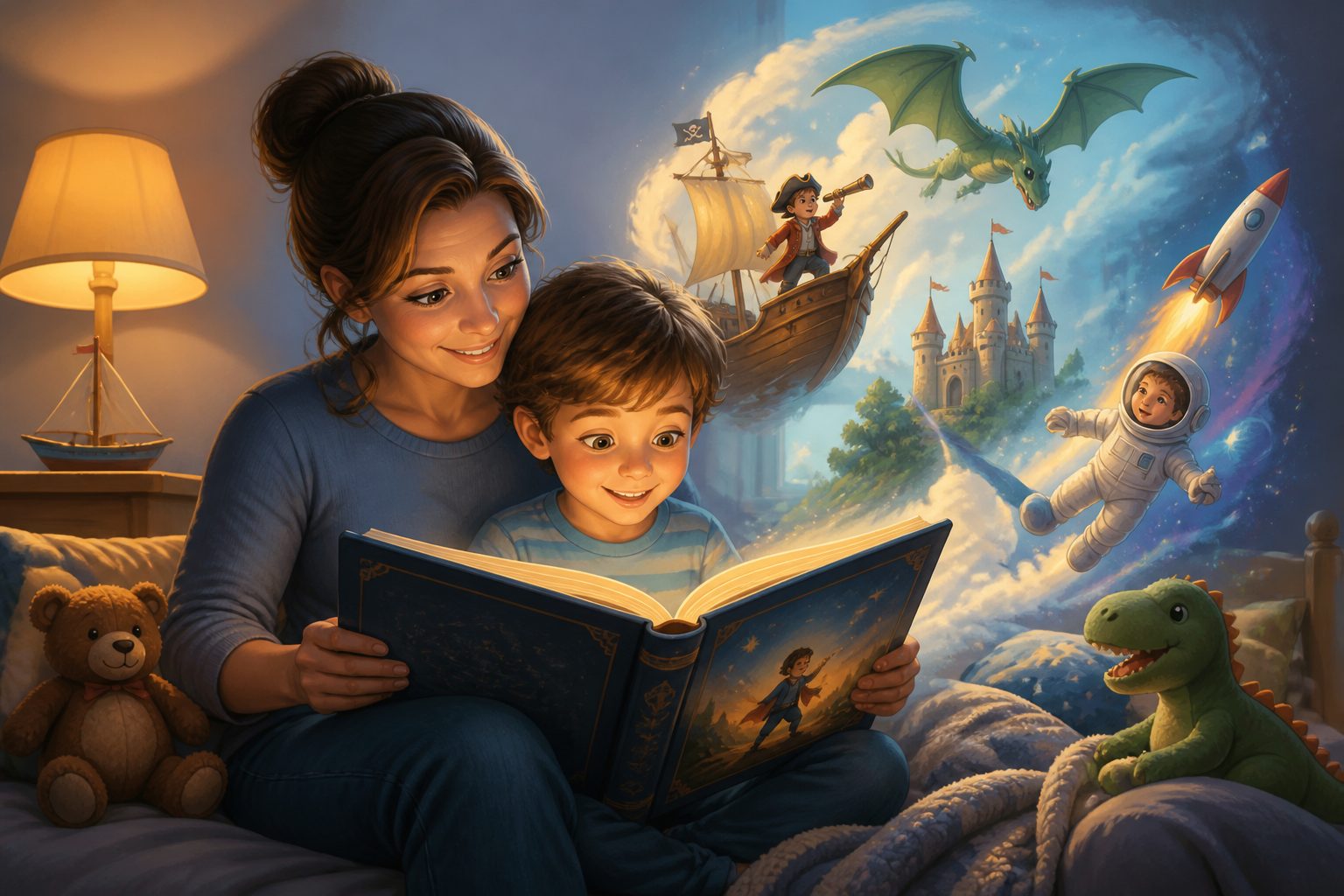
Personalized Books for Boys: A Guide for Parents
September 07, 2026 · Choose personalized books for boys around their interests. Explore story ideas, parent review tips, and digital or softcover gift options with Storywish.