How to Choose a Personalized Book Site Before You Order
Compare personalized book sites using previews, editing tools, print details, and privacy information. Know what to check before ordering a custom keepsake.
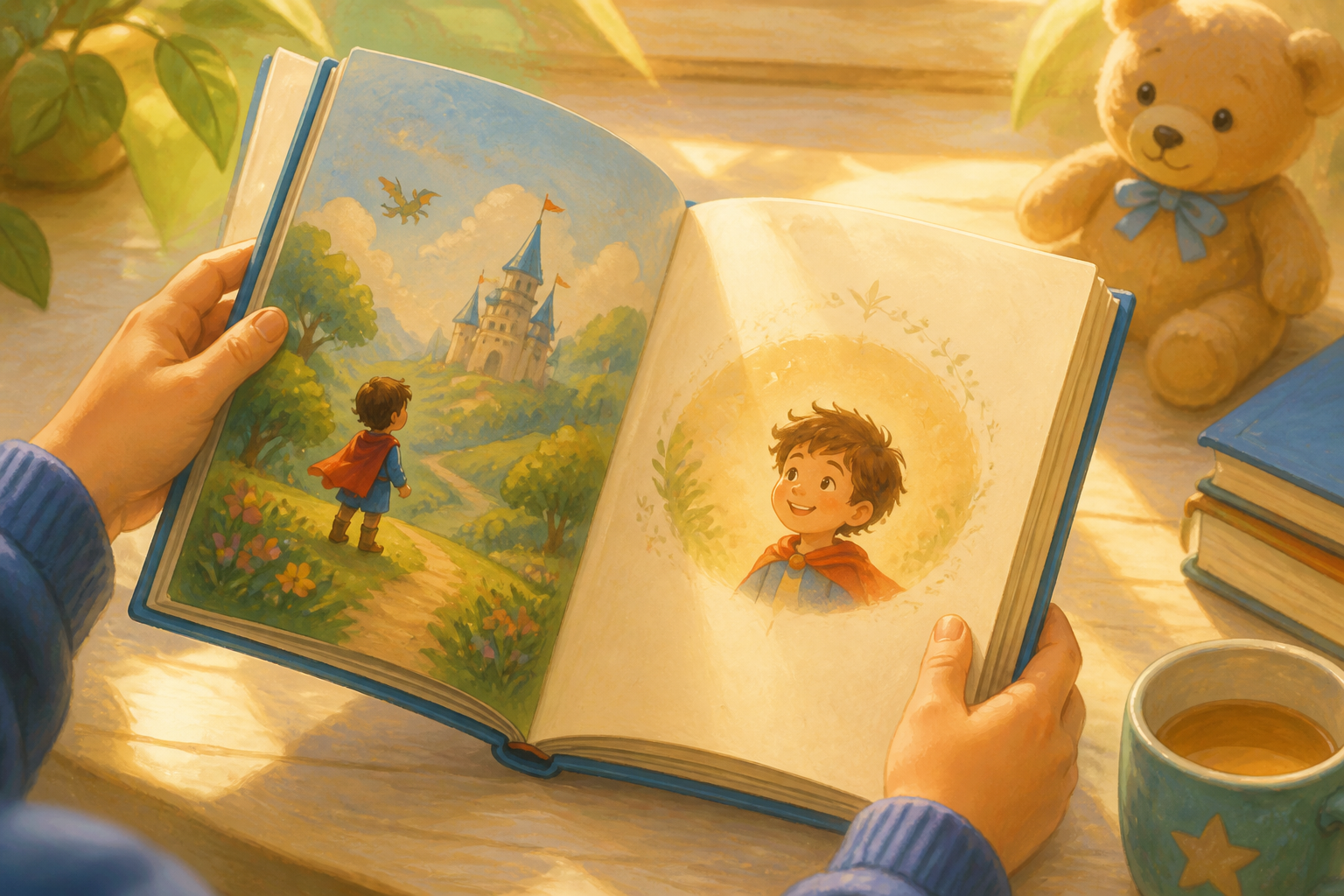
A child's name on the cover tells you that a book has been customized. It does not tell you how much the story changes, whether the illustrations are consistent, or what you can fix before ordering.
A useful buying decision starts with the pages inside. This guide gives you a practical way to evaluate a personalized book site using its preview, editing controls, print details, and privacy information.
At a glance: Decide how much customization you want, inspect a meaningful preview, check the actual editing options, and review the full cost and format before buying. A template story and a newly generated story can both be good choices; judge the finished book against your expectations.
What “personalized” actually means
Sites use the word for different products. Some insert a name into a professionally written story. Others let you choose a character's appearance or select from several fixed adventures. Some generate new text and illustrations from the details you provide.
Those approaches offer different kinds of control. A well-written template may be exactly what you want for a gift. A generated story may allow a more specific adventure but require more review. Neither method guarantees a good result by itself.
A test you can run: Read a sample paragraph and imagine changing the child's name. If everything else would stay the same, the customization may be limited to the name or selected details. If you want the plot to reflect a hobby, relationship, or occasion, check that the preview actually does so.
What to look at in the preview before you order
Does the preview show the book you will receive?
Find out whether you are looking at general sample pages or a preview made from your inputs. Both can be useful, but they answer different questions. A sample shows the writing and art style; your own preview shows how your details were used.
Look beyond the cover. Read enough to understand a complete scene, check several illustrations, and see the ending if it is available. If you cannot inspect the finished book, ask what you can review or change before committing.
Do the personal details belong in the story?
A pet's name or favorite activity should make sense in the scene rather than appear as a disconnected list. Check spelling, pronouns, family relationships, and any detail important to the recipient.
You do not need to disclose a child's address, worries, or a long personal history to make a book meaningful. A familiar hobby, invented character, or gift occasion may provide all the detail you need.
Are the words and pictures consistent?
Read the story once for enjoyment, then check it for continuity. Does the character have the same name throughout? Does an object change color unexpectedly? Does the picture show what the text describes? Is the story's ending complete?
For AI-generated books, inspect each page. The ability to generate an illustration is different from a guarantee that every illustration will match your requested details perfectly.
Questions to resolve before paying
| Question | Evidence to look for |
|---|---|
| How much can I customize? | Clear inputs and a preview showing their effect |
| Can I edit the text? | An actual editing control or a stated correction process |
| Can I change an image? | Image revision options and any limits or charges |
| What gets printed? | Format, dimensions, page count, and a final print preview |
| What does it cost? | Total price, shipping, taxes, and any subscription requirement |
| When should it arrive? | Current production and delivery information for your destination |
| What if there is a problem? | Contact details and correction, return, or cancellation terms |
| How are personal details handled? | A readable privacy policy and photo-use explanation |
Unclear answers are a reason to ask a question or keep comparing options. Packaging photos can show presentation, but they cannot replace a preview of the writing.
What a good site lets you control
Look for controls that match the product you want. If you only need a name dedication in a familiar story, a small form may be sufficient. If you want a new adventure with a pet and sibling, the site needs a way to capture those choices and show the result.
Editing matters when a detail is wrong or the tone does not suit your child. Check whether you can revise a line, change a character, or adjust an illustration, and whether those changes remain available before printing.
More input fields do not automatically mean better writing. The finished pages are the evidence. A long form is useful only if the product makes good use of your answers.
Where Storywish fits
Storywish creates illustrated stories from characters and story ideas you guide. You can build characters using a photo, sketch, or description, then review and edit the result. See the character creation guide for the available options.
If you want a physical book, Storywish offers a softcover printed keepsake with a dedication and preview. Check the printing guide and current order details for the format, price, and delivery information that apply to your purchase.
Read the privacy policy and parent safety guide before sharing information you would like to understand better. You can begin with a written character description if you prefer not to upload a photo.
Use personalization as a choice, not a reading promise
A familiar name or interest can give you something to talk about together. It does not guarantee that a child will request the book again, improve a reading skill, or prefer it to another favorite.
Choose a book whose story and pictures you want to share. General read-aloud guidance from the American Academy of Pediatrics can help you approach reading together without making the personalized product responsible for a particular outcome.
Try the story before choosing the keepsake
Start a personalized story with a small, specific idea:
Create an illustrated story about [chosen character] enjoying [interest] with [companion]. Use one clear task, include [familiar detail], and give the story a complete ending. I want to review the words and pictures before deciding whether to print it.
Read the result, revise anything that needs attention, and choose the format when you are happy with the pages. A good purchase is one where you understand what is customized and have checked what you will receive.
Frequently asked questions
Is a name-only book a bad purchase?
No. It can be a good choice if you like the story and understand the customization. It is less suitable if you expected the plot to change around your child's interests.
Does AI generation mean deeper personalization?
It can allow more changes, but the result still needs review. Look at how your inputs affect the story rather than relying on the technology label.
What should I check first?
Start with the actual story preview. Then check editing options, print details, total cost, and privacy information.
Can I personalize a book without a child's photo?
On Storywish, you can use a sketch or written character description. Check each provider's options rather than assuming a photo is required.
Should I order as soon as I see the cover?
Review the inside pages and order information first. The cover alone does not show the story, illustration continuity, or final print layout.
Want to make your own personalized AI children's story? Try Storywish free.
Related posts
The Magic of Personalized Baby Books for Little Ones
September 09, 2026 · Choose a personalized baby book with clear format advice, family story ideas, and dedication examples. Review a digital story before ordering a softcover gift.
Personalized Books for Dad: Meaningful Keepsakes for Bedtime
September 09, 2026 · Make a personalized book for Dad with family story ideas, dedication examples, and tips for reviewing your digital story and ordering a softcover picture book.
Personalized Books for Toddlers
September 07, 2026 · Choose personalized books for toddlers with advice on simple stories, clear pictures, and softcover keepsakes. Review the book before ordering a family gift.
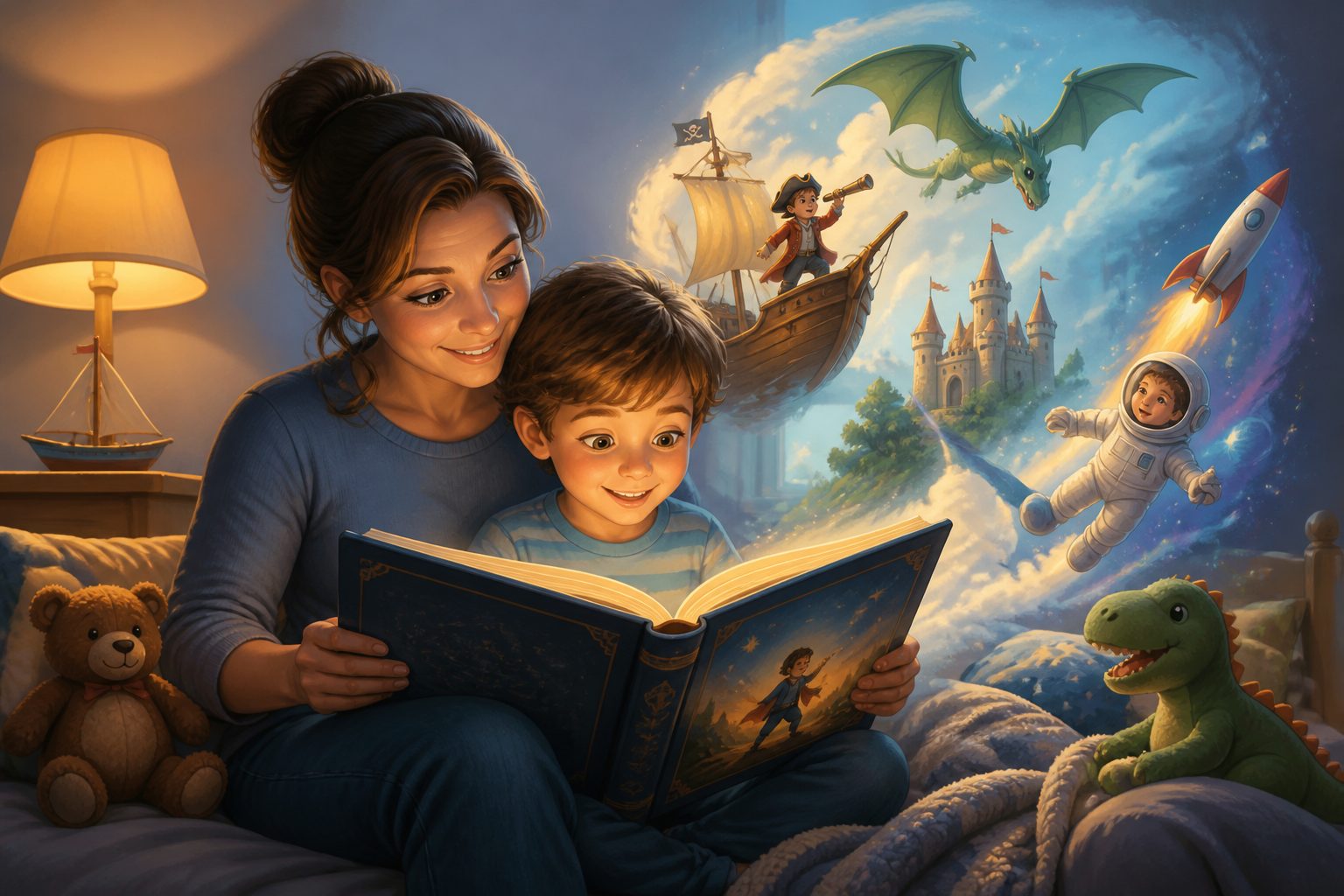
Personalized Books for Boys: A Guide for Parents
September 07, 2026 · Choose personalized books for boys around their interests. Explore story ideas, parent review tips, and digital or softcover gift options with Storywish.